How a Battery Balancer Turned a “Dead” EV into a $1,200 Payday

A 2018 Tesla Model S rolls into the shop. The dashboard is clean—no warning lights, no error codes. But the owner is frustrated. “My range has dropped by nearly 40 miles,” he explains. “The dealer says I need a new battery pack for $16,000. Can you help?”

For most independent shops, this would be the end of the conversation. No codes means no path forward. But for a growing number of forward-thinking repair facilities, this is where the opportunity begins—and it all starts with one specific piece of equipment: an EV battery balancer.”
How a Battery Balancer Works
To understand the value of this tool, you need to understand how an EV battery pack is built. A pack consists of hundreds of individual cells grouped into modules. For optimal performance and longevity, all these cells must maintain roughly the same voltage—a condition known as “cell balance.”
Over time, due to variations in temperature, charging habits, and normal wear, cells begin to drift apart. One cell might read 4.15V while another in the same pack reads 3.95V. This 200-millivolt difference (also called a “delta”) confuses the Battery Management System (BMS). To protect the weaker cells from overcharging or deep discharging, the BMS limits the entire pack’s usable capacity.
The result? The owner loses range, and the car’s computer can’t tell you why—because nothing is broken. It’s simply out of balance.
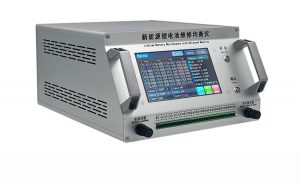
A battery balancer works by connecting to the battery pack’s service port. It then performs a controlled charge-discharge cycle, precisely equalizing the voltage of every single cell in the pack. It doesn’t add new energy—it simply redistributes what’s already there, bringing all cells back into harmony.
The Real-World Impact
Let’s return to that Model S.
The shop owner connects his battery balancer to the vehicle and runs a diagnostic scan. The data confirms the problem: a delta of 180mV across the main pack, well above the acceptable threshold of 50mV.
He initiates the balancing cycle. Several hours later, the machine completes its work. A second scan shows the delta has been reduced to just 32mV—well within spec.
The customer picks up his car the next day. His range? Restored to over 90% of its original capacity. The bill: $1,200. The dealer had quoted $16,000 for a full replacement.
A High-Margin Service with Growing Demand
This isn’t an isolated case. As more EVs exit their factory warranties, the number of vehicles experiencing range degradation from cell imbalance is growing exponentially. Most of these owners are told they need expensive battery replacements. They don’t. They need a simple, affordable balancing service—and right now, very few independent shops can offer it.
For the shop owner, the math is compelling:
-
Typical investment in a professional-grade battery balancer: $4,000 – $8,000
-
Average service charge for a full balancing procedure: $800 – $1,500
-
Payback period: As few as 4 to 6 jobs
Beyond the direct revenue, offering this service builds serious customer loyalty. EV owners with a positive experience will return for everything—tires, brakes, suspension work—and they’ll tell their friends.
The Bottom Line
The battery balancer is proof that in the EV era, the biggest opportunities aren’t always about fixing broken parts. Sometimes, they’re about understanding how complex systems work—and using the right specialized tool to restore what time and use have slowly degraded.
For independent shops ready to capture the growing EV service market, this one tool might be the smartest investment you make this year.