
A Guide to Finding the Best Hydraulic Lift for Your Shop
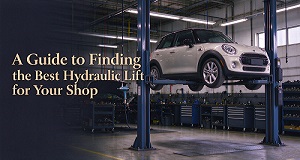
Choosing the right hydraulic lift is one of the most important equipment decisions your shop will make. The right lift improves technician safety, increases productivity, and serves your vehicles for years. The wrong one wastes space, creates bottlenecks, or worse—puts your team at risk.
Know Your Lift Types
Two-Post Lifts are the workhorse of most mechanical repair shops. They provide full underbody access and handle a wide range of vehicles, making them ideal for suspension, exhaust, and engine work.

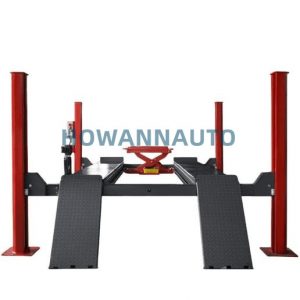
Four-Post Lifts offer superior stability and are the go-to choice for wheel alignment, diagnostics, and heavier vehicles like vans or light trucks. The vehicle drives onto ramps rather than being lifted by arms.

Scissor Lifts are compact and fast, perfect for tire service, brake work, and quick maintenance jobs where space is tight. They take up less floor space and some models are mobile.

Mobile Column Lifts provide ultimate flexibility for shops that need to service vehicles in different bays or outdoor locations.

Match Capacity to Your Workload
A 4-ton capacity handles most passenger cars and SUVs. If you regularly service light commercial vehicles, vans, or trucks, consider a 5.5-ton or higher model. Always build in a safety margin—better to have extra capacity than to strain your equipment.
Check Your Facility Requirements
Concrete floor thickness is critical. Two-post and four-post lifts typically require a minimum of 15-20 cm of reinforced concrete. Some models with base frames can work on thinner slabs, but verify before purchasing.
Ceiling height determines your maximum lifting height and whether you can fit a particular model. Measure carefully and account for overhead obstructions like heaters or lighting.
Power supply matters. Larger lifts may require 400V three-phase power, while smaller models often run on standard 230V single-phase.
Prioritize Safety Certification
ALI (Automotive Lift Institute) certification is the industry standard for safety and performance in North America. ALI-certified lifts meet ANSI/ALI ALCTV requirements and are independently tested by accredited laboratories. When evaluating any lift, verify its ALI certification directly through the ALI website—don’t just trust marketing claims.
Don’t Forget Installation and Support
Professional installation by qualified personnel is essential for safety and warranty compliance. Factor in the cost of proper anchoring, electrical connections, and any floor preparation needed. A reputable supplier should offer installation guidance, operator training, and responsive after-sales support.
The Bottom Line
The best hydraulic lift for your shop is the one that matches your service mix, fits your facility, and comes with verified safety certification. Take time to assess your actual needs before comparing models. A thoughtful purchase decision today prevents costly problems—and dangerous situations—down the road.