Guide to Using and Selecting Car Tire Balancers
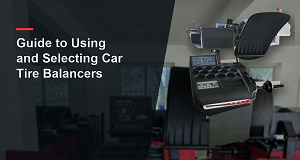
Wheel balancing is one of the most common services your shop performs. A properly balanced wheel reduces vibration, extends tire life, and protects suspension components. Here‘s what you need to know.
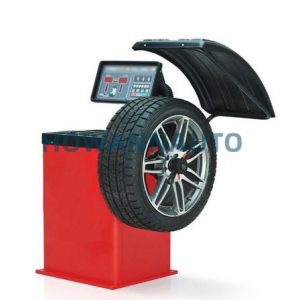
Static vs. Dynamic Balancing
Static balancing corrects imbalance in a single plane, typically for heavy truck tires. Dynamic balancing measures both static and dynamic forces, allowing weights on both inner and outer flanges. This is the standard method in modern tire shops because it simulates real driving conditions.
Step-by-Step: Using a Wheel Balancer
1. Preparation — Clean the wheel and remove old weights. Wear safety glasses and gloves.
2. Mounting — Select the correct cone for the wheel’s center bore. Secure the wheel with the appropriate flange plate and lock nut.
3. Input Parameters — Enter wheel dimensions manually or let the machine measure automatically via sonar or laser arms.
4. Spin and Measure — Lower the guard and start the cycle. The balancer displays the required weight amount and placement position.
5. Weight Placement — Clean the mounting surface. Follow the laser or LED indicator to position weights precisely.
6. Verification — Spin again to confirm balance.
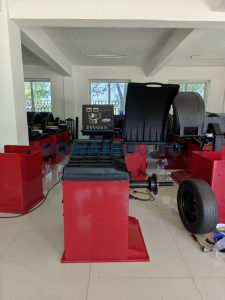
Key Features When Selecting a Balancer
-
Accuracy — Quality balancers achieve measurement uncertainty of 1 gram or better.
-
Automation — Fully automatic models handle parameter detection and weight positioning, reducing training time.
-
Wheel Capacity — Standard machines handle rims from 10“ to 30” and weights up to 75 kg.
-
Ergonomics — Compact models with wheel lifts and automatic approach improve workflow in tight bays.
-
Durability — Choose equipment built to withstand daily use, with supplier support for installation and service.
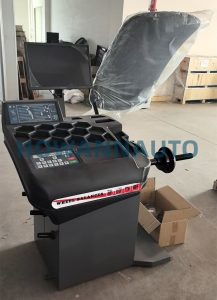
Common Applications
-
Vibration diagnosis — Identifies imbalance causing steering wheel or seat vibration.
-
Tire wear reduction — Balanced wheels wear more evenly, extending tire life.
-
Road force diagnostics — Detects tire stiffness variations that standard balancing may miss.
-
Alloy wheel handling — ALU programs and protective components prevent damage to premium wheels.
Making Your Selection
Match the balancer to your service volume and vehicle mix. General repair shops do well with a mid-range model featuring automatic measurement and laser guidance. High-volume tire shops benefit from fully automated diagnostic balancers that minimize cycle times.
Quality balancing equipment pays off through fewer comebacks and greater technician efficiency. Choose a machine that matches your shop‘s workflow—not just its showroom appeal.