Types of Tire Changers: A Simple Classification Guide
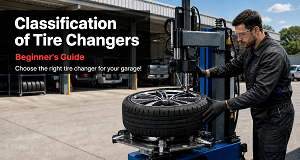
Tire changers are essential machines for removing and installing tires safely and efficiently. However, different vehicles and workshops require different equipment. Understanding the main types of tire changers can help you select a suitable model for your business.
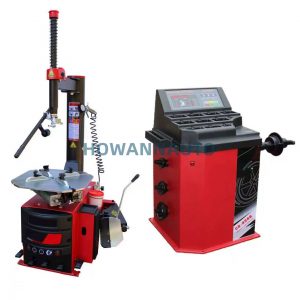
1. Manual Tire Changers
Manual tire changers use mechanical force and require more operator involvement. They have a simple structure, take up little space, and usually cost less than powered machines.
They are suitable for:
- Occasional tire service
- Small repair shops
- Mobile maintenance
- Emergency use
Manual models are economical, but they may not be efficient enough for workshops handling many tires every day.
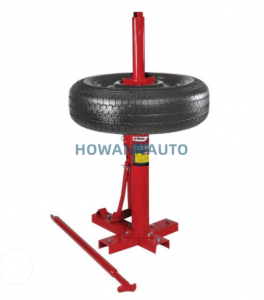
2. Semi-Automatic Tire Changers
A semi-automatic tire changer normally uses a side-swing mounting arm. The operator must position and lock the arm manually before removing or installing the tire.
This type offers a practical balance between price and productivity. It is widely used by small and medium-sized automotive workshops.
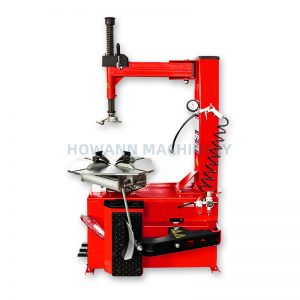
3. Fully Automatic Tire Changers
Fully automatic tire changers typically feature a pneumatic tilting column. The mounting head can be positioned quickly, making repeated tire service faster and easier.
Their main advantages include:
- Higher working efficiency
- Easier operation
- Consistent tool positioning
- Reduced operator fatigue
These machines are ideal for professional tire shops, dealerships, and high-volume service centers.
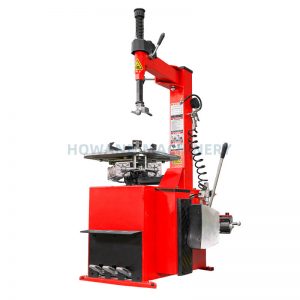
4. Leverless Tire Changers
A leverless tire changer removes and installs tires without relying on a traditional tire lever. This reduces the risk of scratching the rim or damaging the tire bead.
Leverless models are especially useful for:
- Low-profile tires
- Run-flat tires
- High-performance wheels
- Alloy and custom rims
Although they are generally more expensive, they provide better protection and greater automation.
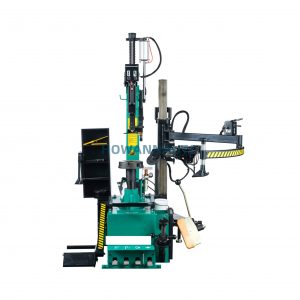
5. Motorcycle Tire Changers
Motorcycle tire changers are designed for smaller wheels and narrower rims. Their clamping systems and accessories are adapted for motorcycles, scooters, and similar vehicles.
Using a dedicated motorcycle tire changer helps prevent incorrect clamping and potential rim damage.
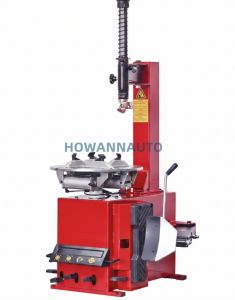
6. Truck Tire Changers
Truck tire changers are built for large, heavy wheels used on trucks, buses, agricultural vehicles, and construction machinery. They often use hydraulic clamping and powerful electric motors.
Because commercial tires vary significantly in size and weight, buyers should carefully check the supported rim diameter, maximum tire width, and lifting capacity.
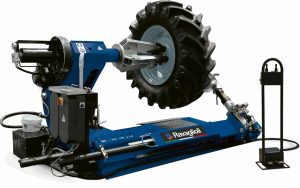
How to Choose the Right Tire Changer
Before purchasing a tire changer, consider the following factors:
- Types of vehicles you service
- Daily tire-changing volume
- Supported wheel and rim sizes
- Compatibility with run-flat or low-profile tires
- Available workshop space
- Required accessories and safety features
A small workshop may prefer a semi-automatic model, while a busy professional tire shop can benefit from a fully automatic or leverless tire changer. Heavy-duty service providers should choose equipment specifically designed for commercial vehicle tires.
Conclusion
Tire changers can be classified as manual, semi-automatic, fully automatic, leverless, motorcycle, and truck models. Each type is designed for different workloads and tire specifications. Selecting the right machine improves service efficiency, protects wheels and tires, and creates a safer working environment.
Frequently Asked Questions
What is the most common tire changer for auto repair shops?
Semi-automatic and fully automatic tire changers are the most common choices for passenger car service.
Can one tire changer handle every type of tire?
No. Passenger car, motorcycle, truck, run-flat, and oversized tires may require different machines or accessories.
Is a leverless tire changer worth buying?
It is a valuable choice for workshops that frequently service low-profile, run-flat, or expensive alloy wheels.