Preparing Your Workshop for the EV Era: Essential Equipment Upgrades
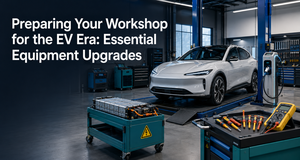
The rapid growth of electric vehicles is changing the automotive service industry. As more EVs enter the market, workshops must be ready to handle high-voltage systems, heavy battery packs, advanced electronics, and new diagnostic requirements.
Preparing for this transition does not mean replacing every tool in your workshop. The priority is to invest in equipment that improves safety, efficiency, and service capability.
High-Voltage Safety Equipment
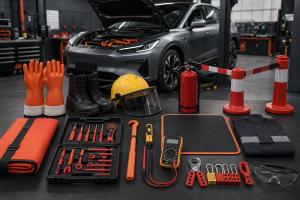
Electric vehicle battery systems can operate at several hundred volts, making proper protection essential. Workshops servicing EVs should be equipped with:
- Class-rated insulated gloves and protective footwear
- Insulated hand tools
- Voltage detectors and high-voltage multimeters
- Insulated floor mats
- Lockout and tagout kits
- Clearly marked safety barriers and warning signs
Protective equipment must be inspected regularly and replaced according to the manufacturer’s recommendations.
EV-Compatible Lifting Equipment
Battery packs are large, heavy, and usually installed beneath the vehicle. Technicians therefore need clear access to the underbody.
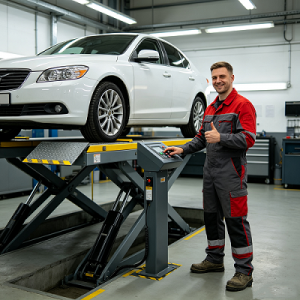
Existing vehicle lifts should be checked for suitable capacity, lifting-point compatibility, and unobstructed battery access. For battery removal and installation, a dedicated battery lift table is one of the most important upgrades. It should offer stable positioning, precise height adjustment, and sufficient load capacity.

Advanced Diagnostic Tools
EV maintenance relies heavily on software and electronic diagnostics. Traditional scan tools may not provide access to battery management systems, electric drive units, charging systems, and thermal management components.
An EV-ready diagnostic platform should support:
- Battery state-of-health analysis
- High-voltage system fault detection
- Charging system diagnostics
- Thermal management monitoring
- Software updates and system calibration
Workshops should also confirm that their diagnostic tools receive regular updates for new vehicle brands and models.

Battery Handling and Storage
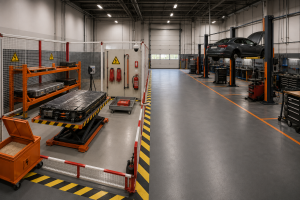
Damaged or defective lithium-ion batteries require controlled handling. A designated battery area should be separated from general repair activities and equipped with appropriate warning signs, ventilation, monitoring equipment, and fire-response solutions.
Workshops may also need insulated battery covers, safe transport trolleys, storage containers, and temperature-monitoring devices. Local regulations should always be reviewed before storing or transporting high-voltage batteries.
Charging and Electrical Infrastructure
Installing an EV charger allows technicians to verify charging performance and return serviced vehicles with sufficient battery capacity. Depending on the workshop’s needs, this may include AC charging stations or higher-powered equipment.
Before installation, a qualified electrician should assess the building’s electrical capacity, wiring, protection systems, and future expansion requirements.
Training Is Part of the Upgrade
Equipment alone cannot make a workshop EV-ready. Technicians must understand high-voltage isolation procedures, battery risks, emergency response, and manufacturer-specific service requirements.
A phased approach is often the most practical: begin with safety equipment and training, then add lifting, diagnostic, battery-handling, and charging solutions as demand increases.
By upgrading early, workshops can protect their teams, expand their service capabilities, and remain competitive as electric vehicles become a larger part of the automotive market.